Sustained work is the real test — and the latest Australian numbers show why it needs more support
Getting a job is one step. Staying in work for a full year is another — and it is the step where disabled people are too often left without the right support.
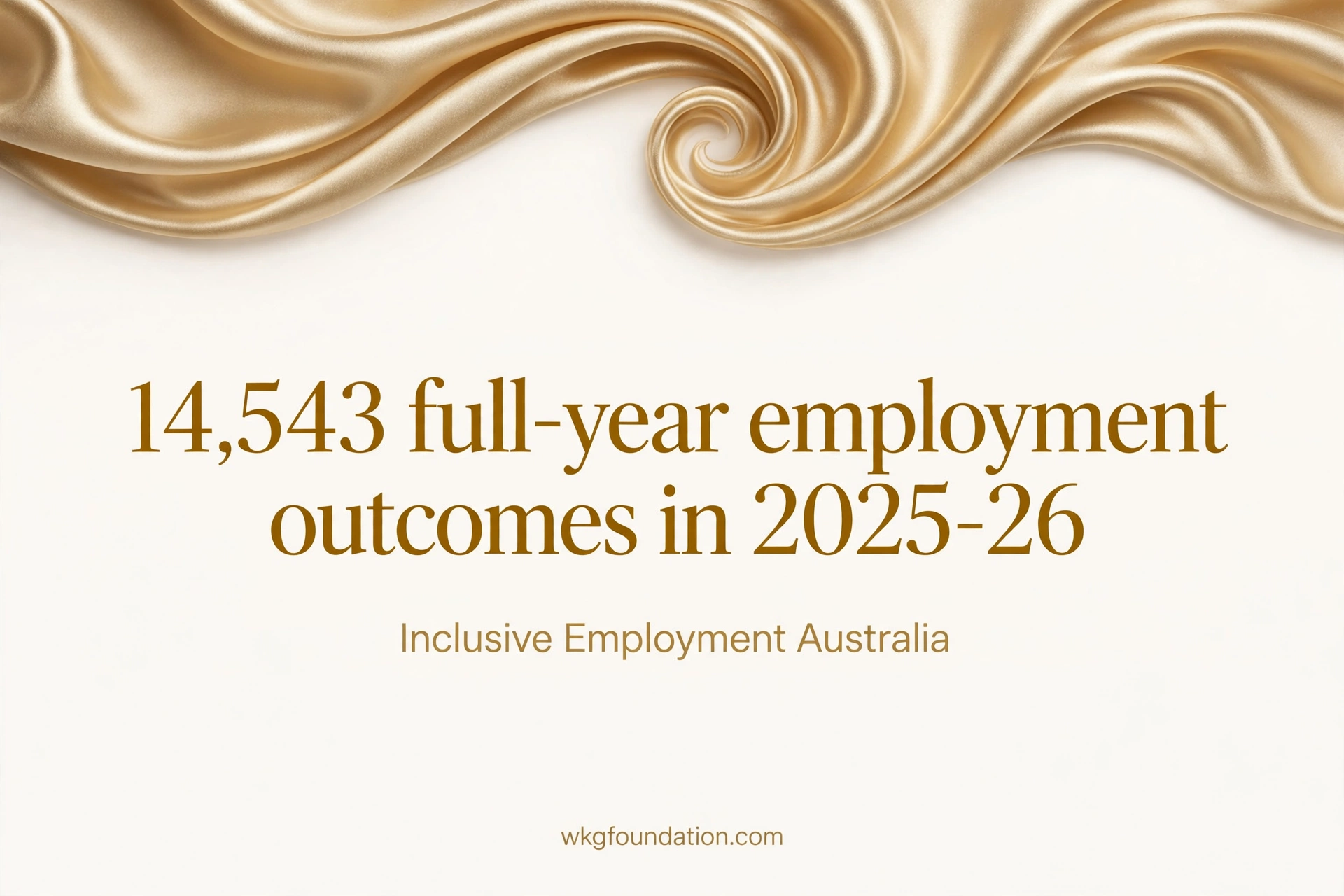
The latest figures from the Australian Institute of Health and Welfare, tracking Inclusive Employment Australia, count valid 52-week full employment outcomes for people with disability aged 15 and over. In 2025–26, there were 14,543 such outcomes, compared with 16,041 in 2020–21, the baseline year used to track change. That is a fall of around 9% — not a collapse, but a clear sign that sustained employment is not getting easier on its own.
The breakdowns tell a more detailed story:
- By state: New South Wales recorded 5,295 outcomes in 2025–26, the highest of any state or territory, compared with 40 in the Northern Territory.
- By gender: 7,788 outcomes for males and 6,696 for females.
- By age: The 25–44 age group recorded 5,981 outcomes, compared with 603 for people aged 65 and over.
- By background: 1,069 outcomes for First Nations people, compared with 13,474 for non-Indigenous people; and 2,593 for people from culturally and linguistically diverse backgrounds, compared with 11,950 for the non-CALD group.
- By primary disability: Psychiatric disability was the largest group, with 5,763 outcomes, compared with 130 for vision as a primary disability.
None of these numbers are about ability. They are about access — to the right role, the right adjustments, the right manager, and support that does not disappear after the first week.
That is the work WKG Foundation exists to do: helping people with disabilities build careers on their own terms, with practical, mentor-led support that carries through from finding work to staying in it and growing in it. Sustained employment is not achieved by a placement alone. It is achieved when workplaces are designed to include people, when adjustments are normal rather than exceptional, and when disabled workers have someone in their corner for the long haul.
If you are an employer, the question these numbers ask is simple: what changes in your workplace would turn a short-term placement into a year of sustained, valued work? If you are a disabled person navigating your career, you are not alone in finding that the hardest part comes after the offer — and support for that part is exactly what we are building.
Next step: Explore WKG Foundation’s work, or get in touch about mentoring, partnerships, and career support at wkgfoundation.com.
Source: AIHW, Inclusive Employment Australia, Australia’s Disability Strategy. Data collected by the Australian Government Department of Social Services. Source link: https://www.aihw.gov.au/australias-disability-strategy/outcomes/employment-and-financial-security/inclusive-employment-australia